Power
How Much Power Do You Actually Need for Car Audio?
Researched from published physics, alignment relations and manufacturer specifications. Updated .
Quick answer
Wattage numbers are the easiest thing to compare when shopping for an amplifier, which is exactly why they get chased past the point of making sense. The relationship between power and loudness is logarithmic, not linear, and once that relationship is understood, a lot of overspending on amplifier power stops looking necessary.
This guide walks through the actual physics behind SPL and power, why two identical subwoofers gain more from cone area than from more watts, and how to size an amplifier to a real, useful power need instead of the biggest number a budget allows.
How much louder does doubling power actually make a system?
Doubling electrical power always produces a 3 dB increase in output, regardless of the starting wattage. That relationship holds true at every point on the scale: 100 to 200 watts is 3 dB, and 1,000 to 2,000 watts is also 3 dB. The formula behind it is SPL equals sensitivity plus 10 times the base-10 logarithm of watts, and the logarithm is what flattens out the gains as the wattage climbs.
Because loudness is logarithmic, human hearing perceives a roughly 10 dB increase as a doubling of loudness, which requires ten times the power, not two times. That is why going from a 500-watt amplifier to a 1,000-watt amplifier, a doubling of power and only 3 dB, sounds like a noticeable but modest step up rather than a doubling of anything a listener actually experiences.
This same math explains why shopping purely on an amplifier's wattage number rarely tells the full story. Two amplifiers rated at 1,000 watts RMS can sound different in a system not because one is somehow delivering more than its rated power, but because differences in supply voltage, thermal headroom, and how cleanly each unit holds its rating under sustained load all affect how close real-world output gets to the number on the box. The published formula describes the ceiling; how close a given amplifier gets to that ceiling in practice is a separate question worth checking against actual bench data where it is available.
SPL versus power: what the numbers really look like
| Power change | Multiple | SPL gain |
|---|---|---|
| 500W to 1,000W | 2x | 3 dB |
| 500W to 2,500W | 5x | 7 dB |
| 500W to 5,000W | 10x | 10 dB (perceived doubling of loudness) |
Published figure Source: SPL = sensitivity + 10 x log10(watts). This is published acoustic physics, not a manufacturer convention. It applies to any driver, subwoofer or otherwise, at any sensitivity rating.
Is cone area a cheaper way to get louder than more power?
Two identical subwoofers gain roughly 3 dB from cone area alone, before any extra amplifier power is added. That means a second matched driver on the same amplifier power can deliver the same SPL bump as doubling the watts to a single driver, and it often costs less than the jump to a much larger amplifier and the wiring to support it.
How do you decide between more power and more drivers?
Start with how much vehicle space and budget actually exist before deciding. A single subwoofer on a well-matched amplifier is the simplest, cheapest path to a noticeable improvement over a factory system, and for most daily listening it is enough. The case for a second driver instead of a bigger amplifier gets stronger when the goal is specifically more low-end output rather than a general upgrade, since cone area scales output without demanding more from the electrical system.
The case for more power instead of more drivers gets stronger when space is the constraint, since a single well-powered subwoofer takes less box volume than two smaller ones at equivalent output. Either path works; what does not work is assuming a bigger number on the amplifier box is automatically the better upgrade.
There is also a wiring and electrical cost difference between the two paths worth weighing. A second subwoofer usually means a second set of speaker leads and, depending on impedance, a different wiring scheme to keep the amplifier within its stable operating range, while a single larger amplifier means heavier gauge power wire and a bigger main fuse. Neither cost is trivial, and pricing both paths with the actual wiring included, not just the headline component, often narrows the decision more than the SPL math alone.
What does sensitivity have to do with power needs?
Sensitivity, usually listed in dB at 1 watt and 1 meter on a spec sheet, sets the starting point that the SPL formula builds on. Two subwoofers rated for the same RMS power can differ by several dB in sensitivity, and because SPL is additive with sensitivity, a more sensitive driver needs less amplifier power to reach the same output as a less sensitive one. This is the reason two builds with identical amplifiers can sound noticeably different in loudness.
Checking sensitivity before checking RMS wattage alone is a better way to compare subwoofers when the goal is maximum output per watt, since a driver with high sensitivity gets more decibels out of every watt the amplifier delivers.
Cabin gain complicates this comparison somewhat, since a sealed vehicle cabin reinforces low frequencies below a certain point, which is a well-known but hard-to-quantify convention rather than a fixed number that applies equally to every vehicle. A hatchback with a large open cargo area behaves differently than a sedan with a separate trunk, so a sensitivity spec measured in free air or a test enclosure is a useful comparison tool between drivers, not a guarantee of the exact SPL a given vehicle will produce.
What you need to size power correctly
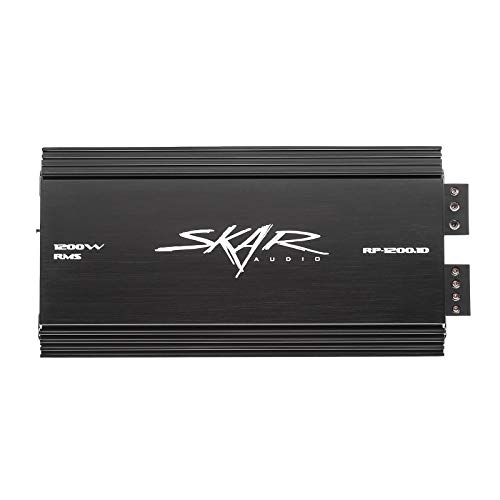
Skar Audio RP-1200.1D
Price varies, check the listingA well-matched monoblock amplifier at a realistic RMS rating covers most single-subwoofer builds without chasing an oversized number.
Check price on Amazon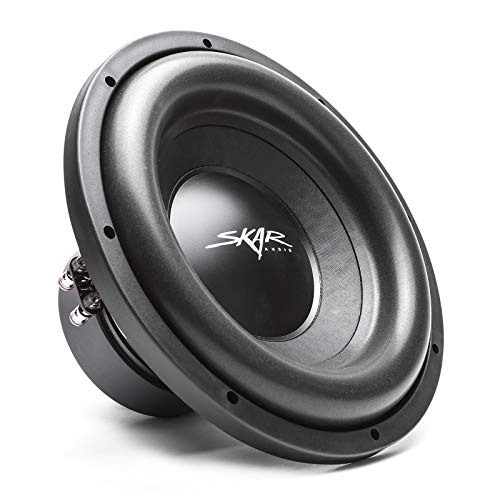
Skar Audio SDR-12 D4
Price varies, check the listingA dual-voice-coil 12-inch subwoofer with solid sensitivity gets more output per watt than an undersized or poorly rated driver.
Check price on Amazon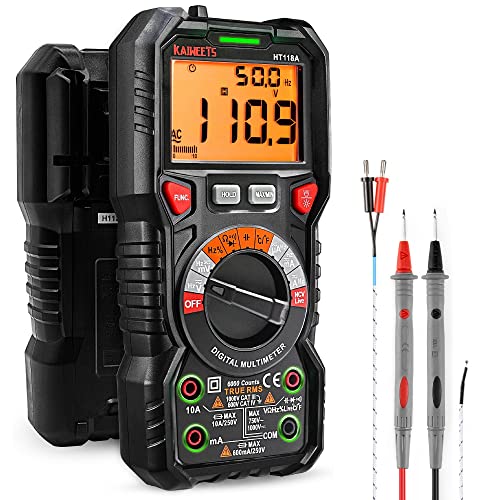
KAIWEETS automotive true RMS
$37.99A multimeter confirms the amplifier is delivering the gain and voltage it is actually rated for rather than a number printed on the box.
Check price on AmazonCommon mistakes when sizing power
The most common mistake is comparing amplifiers or subwoofers by peak power instead of RMS, since peak numbers are marketing figures that a driver cannot sustain and that tell buyers nothing about real, continuous output. A second is assuming a bigger amplifier automatically means a louder system, when in practice the diminishing 3 dB per doubling means the jump from a mid-size amplifier to a much larger one is a smaller improvement than the price difference suggests.
A third mistake is ignoring sensitivity entirely and shopping on RMS wattage alone, which misses one of the cheapest ways to gain real decibels. Running the actual numbers through the RMS vs peak power calculator and the SPL calculator before buying an amplifier avoids most of this overspending.
A fourth, subtler mistake is chasing power increases without first confirming the amplifier is even reaching its rated output on the vehicle's actual electrical system. An amplifier starved of clean voltage under load will fall short of its rated RMS power regardless of what the box says, which means the real fix in that case is the electrical system, not a bigger amplifier stacked on top of the same voltage problem. Checking supply voltage under load with a multimeter before assuming the amplifier itself is the limiting factor saves a purchase that would not have solved the actual issue.
Frequently asked questions
- Does doubling my amplifier's power double how loud my system sounds?
- No. Doubling power always produces a 3 dB increase in output, and human hearing perceives roughly 10 dB as a doubling of loudness. Getting a true doubling of perceived loudness requires ten times the power, not two times, which is why upgrading from a 500-watt to a 1,000-watt amplifier sounds like a moderate step up rather than a dramatic one.
- Is it better to buy a bigger amplifier or a second subwoofer?
- It depends on space and budget. Two identical subwoofers gain about 3 dB from cone area alone at the same power per driver, which can match the SPL gain of doubling the amplifier's wattage to a single driver, often for less cost once wiring and electrical upgrades are factored in. A single driver is simpler and takes less space when that is the constraint.
- Why do two subwoofers with the same RMS rating sound different in loudness?
- Sensitivity, not just RMS power, determines how loud a driver gets per watt. A subwoofer rated for higher sensitivity in dB at 1 watt and 1 meter produces more output at the same wattage than a less sensitive one, so comparing subwoofers on RMS power alone misses a real difference in how loud they will actually play.
- How much power do I need for a daily-driver upgrade?
- A single subwoofer in the 500 to 1,000 watt RMS range on a matched monoblock amplifier covers most daily listening upgrades over a factory system. Going well beyond that range mainly chases diminishing 3 dB gains per doubling of power, which is a small perceived change relative to the added cost and electrical demand.
- What is the formula for SPL and power?
- SPL equals sensitivity plus 10 times the base-10 logarithm of watts. Sensitivity is the driver's rated output at 1 watt and 1 meter, and the logarithmic term is why loudness gains shrink as wattage climbs. This formula is published acoustic physics and applies to any speaker or subwoofer regardless of brand.
- Should I compare amplifiers by peak power or RMS power?
- Always compare by RMS power. Peak power is a brief, unsustainable spike rating that manufacturers use for marketing, while RMS reflects the continuous power the amplifier can actually deliver. Sizing a system around peak numbers routinely leads to an underpowered amplifier for the subwoofer it is paired with, and the mismatch often only shows up once the system is driven hard for more than a few seconds at a time.
Researched guidance, not professional advice. SPL formulas describe the physics of loudness, but real-world results depend on the vehicle's cabin, the enclosure, and how the gain is set. Use the calculators as a starting point and adjust for what the actual install shows once it is running.