Intermediate build
A Full System Rebuild: Doors, Subwoofer and One Amplifier
Researched from published relations and manufacturer specifications. Updated .
Quick answer
A five channel amplifier does the whole system from one chassis and one power run, which halves the wiring of a two amplifier build. Four channels drive a component front stage and coaxial rears, and the fifth drives a subwoofer, with deadened doors doing more for the front stage than a more expensive speaker would.
This is the build for a car that needs everything. One five channel amplifier does the front stage, the rear fill and the subwoofer, which means one power run, one ground, one fuse and one remote wire instead of two of each.
The door deadening is on the list deliberately and it is not an optional extra. Sealing the inner door skin turns the door into something closer to an enclosure, which stops the back wave of the speaker cancelling the front wave. That is frequently a larger improvement than spending the same money on a better speaker would have been.
The complete parts list
Grouped by function rather than by price, so you can see what each part of the system costs on its own. Every line links to the product, and the total is computed from catalog prices rather than typed by hand.
Front stage
$194.89-
 Rockford Fosgate
Rockford Fosgate Prime R165-S
A component set with real external crossovers, which is where imaging comes from.
-
 KILMAT
Kilmat 80 mil, 36 sq ft
Butyl damper for the doors. About 25 percent coverage on the outer skin does most of the work.
-
 Siless
Siless Liner 4 mm, 36 sq ft
Closed cell foam at full coverage, to decouple the trim and seal the inner skin.
Rear fill
$57.88-
 PIONEER
Pioneer TS-A1671F 6.5
Three way A series coaxials. Rear fill should support the front stage, not compete with it.
Bass
$77.49-
 Skar Audio
Skar Audio SVR-12 D4
A step up in motor and excursion from the entry drivers at the same coil configuration.
Price varies Check price -
 Q Power
QPower HD112VL side ported
A side ported box, which packages into a trunk corner better than a front ported one.
Amplification and signal
$356.97-
 CT Sounds
CT Sounds CT-800.5D
A published 1,000 watt RMS across five channels, so the subwoofer channel is a real one.
-
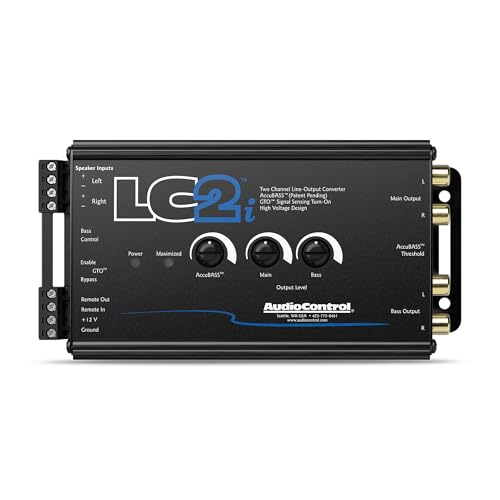 AudioControl
AudioControl LC2i with AccuBASS
AccuBASS restores factory bass rolloff automatically, which is what makes a retained factory head unit sound right at volume.
-
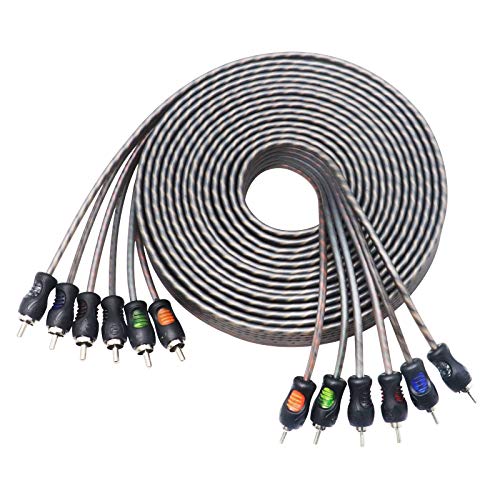 RECOIL
Recoil RCI617 6 channel, 17 ft
Six channels of shielded twisted pair, so front, rear and subwoofer all run from one cable.
-
 GEARit
GearIT 16 gauge, 100 ft
A hundred feet of 16 gauge speaker wire, which covers four doors and a rear deck with spare.
Power
$147.97-

-
 HiFind
True Spec oversized 1/0 OFC big 3
Oxygen free copper big 3. With a full system on one amplifier the charging path matters more, not less.
-

Tools
$117.86-
 KLEIN TOOLS
Klein MM420 auto-ranging TRMS
Auto-ranging true RMS with real current ranges, which makes measuring an actual draw practical.
-
 Poraxy
Poraxy 19 piece trim tool kit
Clip pliers included, which is the tool that saves brittle door card clips.
-

Build total
$953.0616 lines across 6 groups. 1 item returned no price from the catalog and is not included in this figure, so the real total is higher. Prices change often and are a guide only.
What you can skip
Telling you not to buy something is what makes the rest of this list worth reading. On this build, these are the things people add that are not earning their place.
- A separate monoblock. The fifth channel here is a genuine 300 watt class D channel, not a token.
- Rear components. Rear fill wants coaxials: a separate rear tweeter pulls the image backwards.
- Full coverage butyl. A quarter coverage on the outer skin does most of the work and saves both money and weight.
What to upgrade first
When the budget comes back around, this is the order that gets the most for the money.
- A DSP, once everything is in. Time alignment is where most remaining sound quality lives.
- A dedicated monoblock and a second subwoofer, if bass is the priority rather than the front stage.
- An aftermarket head unit, if the factory unit turns out to be the limit after the converter is in.
Frequently asked questions
- Is a five channel amplifier a compromise?
- Less than it used to be. The real limitation is the subwoofer channel, which on most five channel amplifiers is not stable below 2 ohms, so it cannot present the load a dedicated monoblock can. For a single dual voice coil subwoofer wired to 2 ohms that is not a compromise at all, and the halved wiring is a genuine benefit.
- Do I really need to deaden the doors?
- For a component front stage, it is the highest value item on this list. Sealing the inner door skin stops the speaker back wave cancelling the front wave around the edge of the cone, which is often a larger improvement in output than a more expensive speaker. Butyl on the outer skin then stops the panel ringing along with the music.
- Where should the tweeters go?
- As high and as far forward as the car allows, usually the sail panel or the A pillar, aimed roughly at the opposite headrest. Imaging comes almost entirely from tweeter placement, because the woofers are down at ankle height and the ear cannot localise low frequency well. Crossing over too low for the mounting location is the usual mistake.
- How much power do the door speakers actually need?
- Far less than people expect. Most 6.5 inch component sets are rated somewhere between 50 and 100 watts RMS, and the four channels on this amplifier comfortably cover that. Sensitivity matters more than power in a door: three decibels of sensitivity is worth the same as doubling the wattage, and it is usually free in the choice between two sets.
Researched guidance, not professional advice. A car battery will deliver several hundred amps into a short without any drama at all. Fit the main fuse within 18 inches of the battery positive terminal, because that fuse protects the wire and the wire is what starts a fire. Disconnect the battery negative before running power wire, fit a grommet anywhere a cable passes through sheet metal, and keep cables away from steering, airbag and moving components. Sustained high sound pressure causes permanent hearing damage.
Build list
Get the parts list as a checklist
One email with the full build list, every part linked. Nothing else.
No spam. Unsubscribe whenever you like.