Subwoofers
NVX VCW152 v3 Review
Researched from published physics, alignment relations and manufacturer specifications. Updated .
Quick answer
This review was compiled from NVX's published specifications for the VCW152 v3 and the consensus of verified owner reviews across retailers and car audio communities. Nobody on our team installed, measured, or listened to this subwoofer in a vehicle. This is a researched review, and any specification NVX has not published for this model is stated as unpublished rather than estimated.
The VCW152 v3 is a 15 inch driver with a dual 2 ohm voice coil configuration, and its standout published figure is a 1,500 W continuous RMS rating alongside a separate 3,000 W peak or max rating. Publishing an RMS number at all, rather than only a peak figure, is unusual in this size and price range, and it is the main reason this driver is worth a closer look for builders who want a real power figure to plan around rather than a marketing ceiling.
What are the published specifications?
| Specification | Value |
|---|---|
| Nominal size | 15 inch |
| Voice coil configuration | Dual 2 ohm |
| Manufacturer continuous RMS power | 1,500 W (published by NVX) |
| Manufacturer peak or max power | 3,000 W |
| Frequency response | Not published by NVX |
| Sensitivity | Not published by NVX |
| Wireable final impedance | 1 ohm (coils in parallel) or 4 ohm (coils in series) |
| Recommended enclosure volume | Not published by NVX for this model |
Published figure Source: Manufacturer published specifications. NVX publishes a 1,500 W RMS figure in addition to a 3,000 W peak figure for this model, which is unusual at this price. NVX's materials for this model do not state whether that RMS figure was measured to the CTA-2006 test standard, and no enclosure volume, sensitivity, or frequency response is published for this driver, so none of those are estimated here.
Does a published RMS rating mean the VCW152 is CTA-2006 certified?
Not necessarily. NVX publishes a 1,500 W continuous RMS figure for the VCW152 v3, which is already a meaningfully more useful number than a peak-only rating, since it describes sustained rather than momentary power handling. NVX's materials for this specific model do not state that this figure was independently measured to the CTA-2006 test standard, so treat it as a manufacturer-stated continuous rating rather than a third-party certified one.
Either way, do not attempt to convert this driver's 1,500 W RMS figure into an equivalent for a different subwoofer's peak-only rating, or vice versa, since there is no fixed ratio between peak and RMS power across brands or models.
Who should buy the VCW152, and who should not?
This driver fits a builder who wants a genuinely high-output 15 inch subwoofer and needs a real RMS figure to size an amplifier and an upgraded electrical system around, since a 1,500 W RMS rating demands serious sustained current from the vehicle's charging system. It suits SPL-oriented or loud daily-driven builds where the box, amp, and electrical work are all being planned together rather than added piecemeal.
It is a poor fit for anyone without the space for a large 15 inch enclosure or without the budget to upgrade wiring and possibly the alternator or battery to support 1,500 W of sustained draw. It is also not suited to a stock electrical system, since running a driver this size anywhere near its rated power on unmodified factory wiring risks starving the amplifier and dimming the vehicle's other electrical systems.
What enclosure does the VCW152 need?
NVX does not publish a recommended enclosure volume for the VCW152 v3. Build inside the typical 15 inch convention range as a starting point: roughly 1.75 to 3.0 cubic feet sealed, or 3.0 to 5.0 cubic feet ported and tuned between 28 and 33 Hz. That is a convention, not a guarantee, so confirm the current figures at the VCW152 spec page before finalizing dimensions, and run the volume you choose through our sealed box volume calculator or ported box volume calculator. A driver rated for 1,500 W RMS also needs a well braced enclosure, not just a correctly sized one.
How much amp and fuse does this subwoofer need?
An amplifier rated close to the VCW152's published 1,500 W RMS figure is the appropriate target for builders who want to use the driver near its full sustained rating, wired to either the 1 ohm or 4 ohm final impedance the dual 2 ohm coils allow. Using the convention that a class D amp draws current at roughly RMS watts divided by the product of 80 percent efficiency and 14.4 V, an amp actually delivering 1,500 W RMS draws approximately 1,500 divided by (0.8 times 14.4), or roughly 130 A.
That current draw is well beyond what most factory electrical systems and stock power wiring can sustain safely, which is why a build around this driver's full rating typically calls for an upgraded battery, alternator, and appropriately sized power wire. Use our amp fuse calculator with the amp's actual RMS output to size the wire and inline fuse correctly, and never fuse to the subwoofer's power rating instead of the amplifier's real current draw.
What do owners say?
Verified owner reviews of the VCW152 v3 commonly highlight the value of getting a published RMS figure on a large driver at this price, with several owners specifically noting that NVX's willingness to state a continuous rating made amp shopping easier than with peak-only competitors. Owners running it in a large ported enclosure with a properly upgraded amplifier and electrical system report substantial output consistent with a 1,500 W RMS 15 inch driver.
The more common caution from owners is that this is not a driver to underpower or underbox, with several reviews noting that pairing it with too small an amplifier or too small an enclosure undersells what the driver is capable of. That feedback lines up with treating the published RMS figure as a target to build toward rather than a headline number to buy on alone.
What else to consider

Skar Audio SDR-15 D2
Price varies, check the listingA dual 2 ohm 15 inch alternative for builders comparing large-format drivers at a similar power tier.
Check price on Amazon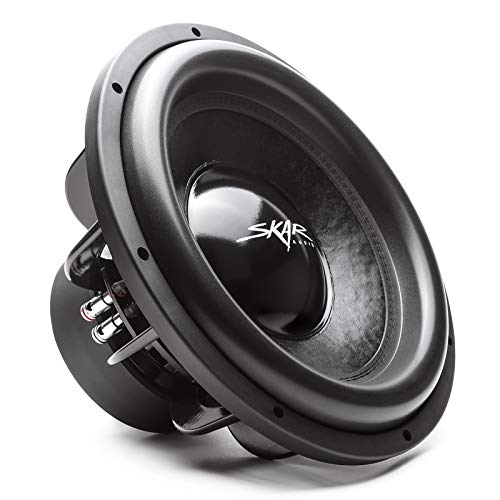
Skar Audio EVL-15 D4
Price varies, check the listingA high excursion 15 inch driver for builders who want Skar's heavier motor design in the largest common driver size.
Check price on Amazon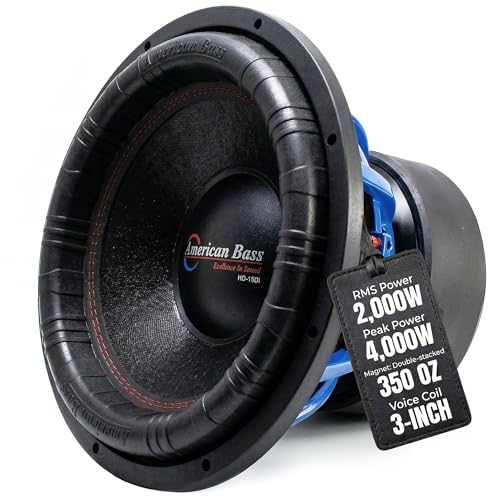
American Bass HD 15
$399.95Another large-format 15 inch option worth comparing on published specifications before committing to a single brand.
Check price on AmazonFrequently asked questions
- What makes the NVX VCW152's power rating different from most subs?
- NVX publishes a 1,500 W continuous RMS figure for the VCW152 v3 in addition to a 3,000 W peak rating, rather than only listing a peak or max number the way many subwoofers do. A published RMS figure gives a more reliable basis for sizing an amplifier, even though NVX does not state that it was measured to the CTA-2006 test standard.
- How much current does the VCW152 draw at full power?
- Using the convention that a class D amplifier draws current at roughly RMS watts divided by the product of 80 percent efficiency and 14.4 V, an amp delivering the VCW152's full 1,500 W RMS rating draws approximately 130 A. That level of sustained draw typically requires an upgraded electrical system rather than stock wiring.
- What size box does the VCW152 need?
- NVX does not publish a recommended enclosure volume for this model, so the typical 15 inch convention range applies as a starting point: roughly 1.75 to 3.0 cubic feet sealed or 3.0 to 5.0 cubic feet ported and tuned between 28 and 33 Hz. Confirm the current figures against NVX's specification page before building.
- Can the VCW152 be wired to 2 ohms?
- No, not with a single driver. Its dual 2 ohm coils combine to either 1 ohm when wired in parallel or 4 ohm when wired in series, so a single VCW152 never presents a 2 ohm load on its own. Reaching exactly 2 ohms would require a different voice coil configuration or a second driver wired alongside it.
- Is the VCW152 a good choice for a stock electrical system?
- No. A driver rated for 1,500 W of continuous RMS power draws roughly 130 A at full output under typical class D efficiency assumptions, which is more sustained current than most stock alternators and factory wiring are built to support. Builders planning to use this driver near its rating should budget for an electrical upgrade alongside the amplifier and box.
Researched guidance, not professional advice. This review is compiled from manufacturer published specifications and verified owner reviews, not hands-on testing. Always disconnect the battery before running power wire, mount the main fuse within 18 inches of the battery positive terminal, and use a grommet anywhere wire passes through sheet metal. Sustained high SPL causes permanent hearing damage, so protect your hearing during setup and tuning.