Speakers
JBL GTO609C Review: Component Speakers With Plus One Cone Tech
Researched from published physics, alignment relations and manufacturer specifications. Updated .
Quick answer
The JBL GTO609C sits in a crowded part of the market: 6.5 inch component sets aimed at people upgrading from factory speakers without buying an amplifier first. Component sets separate the tweeter from the woofer and route each through a dedicated crossover, which is the main thing that distinguishes them from a coaxial that bolts a tweeter directly on top of the woofer cone.
This page is compiled from JBL's published specification sheet, the printed owner manual, and the consensus of verified owner reviews. Nobody on this team has installed, measured, or listened to this specific pair of speakers, so treat the output claims here as a summary of what JBL states and what other owners report, not as a lab result.
What are the published specifications?
| Specification | Value |
|---|---|
| Speaker type | 6.5 inch two-way component system |
| Power handling | 270 watts peak (per pair, system rating) |
| Cone technology | JBL Plus One woofer cone design |
| Crossover | External passive crossover network, included |
| Sensitivity | Not published in the specification sheet we reviewed |
| Sold as | Component set: two woofers, two tweeters, two crossovers |
Published figure Source: Manufacturer published specifications. The 270 watt figure is a peak power rating, which is a marketing number rather than a continuous one. JBL does not break out a separate RMS figure in the sheet we have, so when matching an amplifier, use the amp's CTA-2006 rated output rather than trying to reverse-engineer an RMS number from the peak figure.
Does Plus One cone technology actually add output?
Plus One is JBL's name for shrinking the basket lip and surround intrusion on a woofer so more of the frame diameter becomes active, moving cone area rather than dead space. On paper that means a 6.5 inch Plus One woofer moves more air than a conventional 6.5 inch woofer with a wider surround, which should translate to a bit more low-frequency output and displacement for a given excursion.
We have not measured this ourselves, and JBL does not publish a directly comparable Thiele-Small parameter set against a non-Plus One woofer in the material we reviewed. What we can report is that owner discussions of this line consistently describe the low end as noticeably fuller than a basic coaxial replacement in the same size class, which lines up with the theory behind the design even without a bench test to confirm the margin.
Why does RMS matter more than the 270 watt number?
CTA-2006 is the published standard for amplifier power, and it is what lets you compare an amp's rated output to a speaker's continuous handling on an apples to apples basis. A speaker's peak or max wattage describes a brief transient the voice coil can survive, not the level it plays at all day. When you shop for an amplifier to run behind the GTO609C, match the amp's CTA-2006 rated power per channel to a continuous handling figure, and when that figure is not published, as it is not here, err toward the conservative side rather than assuming the peak number is safe to run continuously.
Why do components image better than a coaxial in a door location?
Stereo imaging, the sense that vocals and instruments sit in specific places rather than just coming from your left and right, is mostly a function of where the high frequencies arrive from. A coaxial fixes the tweeter down at the woofer, which in most cars means both drivers sit near ankle height in the door. A component set lets you relocate the tweeter to the sail panel, dash, or A-pillar, closer to ear level, while the woofer stays low in the door to handle bass and midrange.
The external crossover that comes with the GTO609C is what makes that split possible: it filters the signal so the tweeter only receives the highs it is built to handle and the woofer only receives the lows and mids, protecting both drivers while letting you choose tweeter placement independent of the woofer location.
What installation questions come up with this speaker?
Owners installing the GTO609C most often ask about mounting depth and where to put the external crossover, not about sound quality. JBL's spec sheet includes mounting depth and diameter information that varies by vehicle-specific kit, and none of that fitment data is something we can responsibly repeat here without seeing your specific door panel and factory speaker opening. Before buying, check the mounting depth against your door's clearance behind the factory speaker, confirm the basket diameter matches your factory cutout or that you are prepared to use an adapter ring, and plan a spot to tuck the crossover where it will not rattle against sheet metal or a window regulator.
Who should not buy the JBL GTO609C?
Skip this set if you want a plug-and-play swap with zero extra wiring. A coaxial is a simpler upgrade because it uses a single pair of leads per side. Skip it too if you already run serious subwoofer output and need front speakers that can compete at high volume without breakup; JBL does not publish an RMS figure here, so buyers chasing a specific loudness target with confidence should look at a line where the continuous rating is published outright. Finally, if imaging is not a priority and you just want louder factory-style sound with minimal installation time, a coaxial upgrade paired with door deadening will likely satisfy you for less labor.
What else to consider

Rockford Fosgate Prime R165-S
$79.99The long standing budget benchmark component set, with real external crossovers, for shoppers who want proven owner consensus over a name-brand cone design.
Check price on Amazon
Pioneer TS-A1601C
$120.95A Pioneer component alternative worth cross-shopping if you want a different tonal balance in the same 6.5 inch class.
Check price on Amazon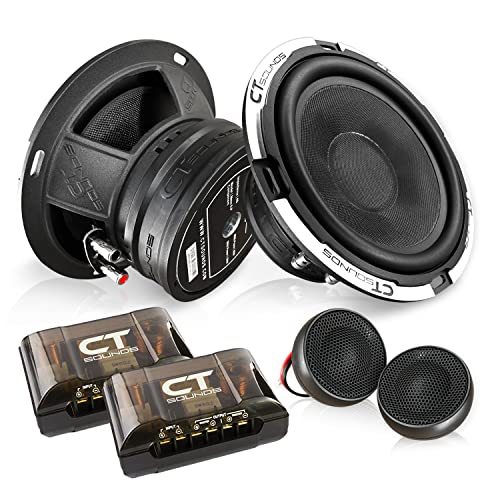
CT Sounds Meso 6.5
$189.99Aimed at buyers planning to add real amplifier power later rather than running off head unit power alone.
Check price on Amazon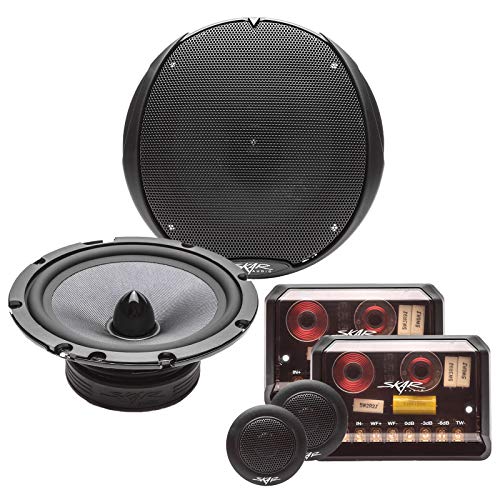
Skar TX65C Elite
Price varies, check the listingA budget-focused component option for anyone who wants the imaging benefit of a component set on a tighter parts budget.
Check price on AmazonFrequently asked questions
- Does the JBL GTO609C include the tweeter and crossover in the box?
- Yes. It is sold as a complete component set with two woofers, two tweeters, and two external passive crossovers, one full set per side. You do not need to buy tweeters or a crossover network separately, though you will need to plan mounting locations for the tweeter and a place to tuck the crossover inside the door or kick panel.
- Is 270 watts the RMS rating or the peak rating?
- JBL's published sheet lists 270 watts as a peak power figure for the system, not a continuous RMS rating. A separate RMS number is not broken out in the material we reviewed. Treat the peak figure as a ceiling for brief transients rather than a number to size a continuous amplifier output against, and lean conservative when choosing amplifier power.
- What is Plus One woofer cone technology?
- It is JBL's design approach of narrowing the basket lip and surround so more of a woofer's overall diameter becomes moving cone area, rather than fixed frame. The goal is more radiating surface, and by extension more potential output, within the same nominal mounting size, though JBL does not publish a direct comparison figure against a conventional woofer in this size.
- Will the GTO609C fit my car doors?
- That depends on your vehicle's mounting depth, factory speaker diameter, and whether a factory crossover or wiring harness is in the way. JBL's fitment guidance and vehicle-specific kits address this, but no online spec sheet can substitute for checking mounting depth and basket clearance against your actual door before you buy.
- Do I need an amplifier to run this component set?
- Not necessarily. A component set will play off head unit power alone, but a factory or aftermarket radio typically outputs far less continuous power than the speaker's peak rating implies, so you may not hear the low-end gain the Plus One woofer is designed to deliver until you add a dedicated amplifier.
- How does a component set compare to a coaxial for sound quality?
- A component set generally images better because the tweeter can be mounted near ear level while the woofer stays in the door, whereas a coaxial fixes both at the same low location. The tradeoff is more installation work: running tweeter leads, mounting pods, and tucking a crossover, versus a coaxial's single-connector swap.
Researched guidance, not professional advice. This review is compiled from JBL's published specifications, the owner manual, and the consensus of verified owner reviews, not from an installation or listening session performed by this site. Confirm mounting depth, wiring, and crossover placement against your own vehicle before buying, and consult a qualified installer if you are unsure about any step.