Subwoofers
CT Sounds Tropo 12 D4 Review
Researched from published physics, alignment relations and manufacturer specifications. Updated .
Quick answer
This review was built from CT Sounds' published specifications for the Tropo 12 D4 and the consensus of verified owner reviews found on retailer listings and car audio forums. Nobody on our team installed, measured, or listened to this subwoofer in a vehicle, and this is a researched review rather than a hands-on one. Where CT Sounds has not published a specification, we say so directly instead of estimating a number.
The Tropo 12 D4 is positioned as CT Sounds' entry-level 12 inch driver: a dual 4 ohm voice coil configuration with a manufacturer max power rating of 1,300 W. Beyond the coil configuration and that power figure, CT Sounds' published materials for this specific model do not include a frequency response, a sensitivity rating, a voice coil diameter, or a CTA-2006 tested RMS number, so this review treats each of those as unpublished rather than guessing at typical values.
What are the published specifications?
| Specification | Value |
|---|---|
| Nominal size | 12 inch |
| Voice coil configuration | Dual 4 ohm (D4) |
| Manufacturer max power | 1,300 W |
| CTA-2006 RMS rating | Not published by CT Sounds |
| Frequency response | Not published by CT Sounds |
| Sensitivity | Not published by CT Sounds |
| Wireable final impedance | 2 ohm (coils in parallel) or 8 ohm (coils in series) |
| Recommended enclosure volume | Not published by CT Sounds for this model |
Published figure Source: Manufacturer published specifications. The 1,300 W figure is a manufacturer max power rating, not a CTA-2006 tested RMS number. CT Sounds has not published sensitivity, frequency response, or a recommended enclosure volume for this specific model, and none of those figures are estimated here.
Is 1,300 watts more power than a sub rated at 1,200 watts max?
Not necessarily. Max or peak power is a marketing figure with no fixed measurement standard behind it, and it is not consistent between brands, so a 1,300 W max rating on one driver and a 1,200 W max rating on a different driver do not tell you which one actually handles more sustained power. The only figure that reliably compares power handling across brands is a CTA-2006 tested RMS rating, and CT Sounds has not published one for the Tropo 12 D4.
Use our RMS vs peak power calculator to understand why these two numbers should never be treated as interchangeable, and shop by RMS rating whenever one is actually published.
Who should buy the Tropo 12 D4, and who should not?
This driver fits a first-time builder who wants a straightforward, inexpensive dual 4 ohm 12 inch subwoofer for a modest daily-driver bass upgrade, paired with a small mono amp and a basic sealed box. The dual 4 ohm coil keeps wiring simple for a single-sub build, and the price point makes it a reasonable entry into a first system.
It is not the right choice for a builder who wants a fully documented spec sheet to plan a box around, since CT Sounds has not published a frequency response, sensitivity rating, or recommended enclosure volume for this model. It is also not suited to SPL-focused or high-power daily builds, since a 1,300 W max figure with no published RMS rating is not a driver to plan a large amplifier around.
What enclosure does the Tropo 12 D4 need?
CT Sounds does not publish a recommended enclosure volume for the Tropo 12 D4. Build inside the typical 12 inch convention range as a starting point: roughly 1.0 to 1.75 cubic feet sealed, or 1.75 to 2.75 cubic feet ported and tuned between 30 and 35 Hz. That range is a convention, not a guarantee, so check CT Sounds' current documentation at the Tropo 12 D4 spec page before finalizing dimensions, and run the volume you choose through our sealed box volume calculator or ported box volume calculator.
How much amp and fuse does this subwoofer need?
Without a published CTA-2006 RMS rating for the Tropo 12 D4, size the amplifier from the amp's own documented output rather than trying to reverse-engineer a number from the 1,300 W max figure. A modest mono amp in the 300 to 600 W RMS range at 2 ohms is the general territory a budget-tier 12 inch driver like this is typically paired with in first-build threads, though you should confirm any specific amp against your own goals rather than treating that as a hard ceiling.
Once you know the amp's real RMS output, use the convention that a class D amp draws current at roughly RMS watts divided by the product of 80 percent efficiency and 14.4 V, then size your power wire and inline fuse from that current draw with our amp fuse calculator rather than from the subwoofer's own power figure.
What do owners say?
Verified owner reviews of the Tropo 12 D4 generally describe it as a solid value pick for a first bass upgrade, with recurring comments about the dual 4 ohm coil's flexible wiring and the driver's low price relative to other 12 inch options. Owners running it in a small sealed box off a budget mono amp report a noticeable step up from factory sound for the money.
The more common criticism in owner discussions is the lack of published detail beyond the coil configuration and max power figure, which several buyers note makes it harder to compare directly against subwoofers that publish a fuller spec sheet, sensitivity and frequency response included. That gap is consistent with what CT Sounds has published for this specific model.
What else to consider
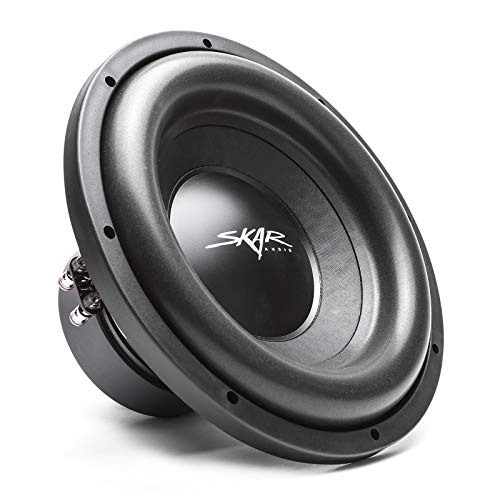
Skar Audio SDR-12 D4
Price varies, check the listingA step up with a full published spec sheet, including sensitivity and frequency response, for builders who want more data to plan a box around.
Check price on Amazon
Orion Cobalt CBW124D
$74.95Another inexpensive dual 4 ohm 12 inch option that owners commonly pair with a small mono amp for a similar entry-level build.
Check price on Amazon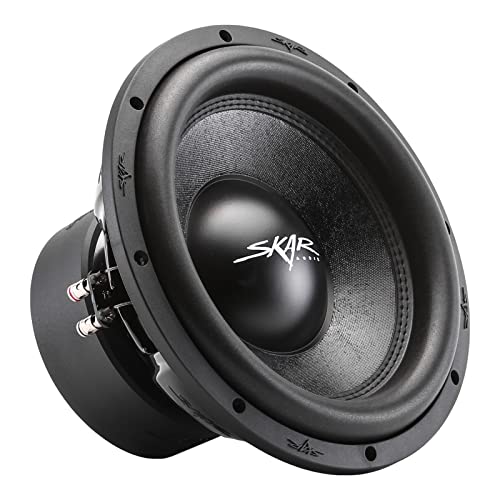
Skar Audio SVR-12 D4
Price varies, check the listingA mid-tier driver with more published headroom for builders who outgrow a budget-tier sub after their first system.
Check price on AmazonFrequently asked questions
- Is the CT Sounds Tropo 12 D4 good for a first subwoofer build?
- Yes, for a modest first build. It is an inexpensive dual 4 ohm 12 inch driver with simple 2 or 8 ohm wiring for a single sub, which makes it approachable for someone building their first system with a small mono amp and a basic sealed box. It is not aimed at SPL competition or high-power daily builds.
- What is the RMS rating of the Tropo 12 D4?
- CT Sounds has not published a CTA-2006 tested RMS rating for this model, only a 1,300 W manufacturer max power figure. Treat the max rating as an upper ceiling rather than a sustained power number, and size any amplifier to the amp's own documented RMS output instead of the subwoofer's max figure.
- What size box does the Tropo 12 D4 need?
- CT Sounds does not publish a recommended enclosure volume for this model, so the safest starting point is the typical 12 inch convention range of roughly 1.0 to 1.75 cubic feet sealed or 1.75 to 2.75 cubic feet ported tuned between 30 and 35 Hz, confirmed against CT Sounds' current documentation before building.
- Can the Tropo 12 D4 be wired to 4 ohms?
- No. Its dual 4 ohm coils only combine to 2 ohms when wired in parallel or 8 ohms when wired in series, never to 4 ohms on a single driver. A 4 ohm final load would require a different voice coil configuration, or a second dual 4 ohm subwoofer wired alongside this one.
- How does the Tropo 12 D4 compare to the Skar SDR-12 D4?
- Both are dual 4 ohm 12 inch drivers with similar manufacturer max power figures, but Skar publishes a fuller spec sheet for the SDR-12 D4, including sensitivity and frequency response, while CT Sounds has not published those figures for the Tropo 12 D4. That extra published detail makes the SDR-12 D4 easier to plan a box and amp around with confidence.
Researched guidance, not professional advice. This review is compiled from manufacturer published specifications and verified owner reviews, not hands-on testing. Always disconnect the battery before running power wire, mount the main fuse within 18 inches of the battery positive terminal, and use a grommet anywhere wire passes through sheet metal. Sustained high SPL causes permanent hearing damage, so protect your hearing during setup and tuning.