Enclosures
Sealed vs Ported Subwoofer Box: Which One Should You Build?
Researched from published physics, alignment relations and manufacturer specifications. Updated .
Quick answer
Sealed and ported are not two flavors of the same box, they are two different alignments that trade output, size, and tolerance for error against each other in opposite directions. A sealed enclosure is an air spring: it resists cone movement smoothly and predictably, rolls off gradually below its tuning point, and rarely punishes a builder for being a little off on volume. A ported enclosure adds a tuned vent that reinforces output right around a specific frequency, at the cost of a larger box, a steeper rolloff below that frequency, and a real risk of driver damage if the low end is not filtered.
Neither one is universally correct. The right choice depends on how much space is available, whether the goal is accurate, tight bass or maximum output for the power on hand, and how much margin for error the build allows. This comparison lays out the published physics, the conventional volume ranges builders actually use, and where each design earns its keep.
Is a ported box really louder than a sealed box?
Yes, near the tuning frequency, and the roughly 3 dB figure is a well established result of vented alignment design, not a marketing number. A ported box uses the mass of air in the port working against the enclosure's air spring to create a second resonance that reinforces the driver's own output right around the tuning frequency, typically 30 to 35 Hz for a 12 inch driver in a daily-use enclosure. That reinforcement is where the extra output comes from, and it means the same subwoofer, the same amplifier power, and a properly tuned ported box will play noticeably louder in that band than the identical driver in a sealed enclosure.
The catch is that the advantage is concentrated near tuning. Below the tuning frequency, a ported box rolls off at 24 dB per octave, twice as steep as a sealed box's 12 dB per octave, because the port stops loading the cone and the driver starts to unload rapidly. A sealed box gives up the peak output but keeps a gentler, more even rolloff across the band it does cover.
Head to head
| Characteristic | Sealed | Ported |
|---|---|---|
| Typical net volume | 1.0 to 1.75 cu ft | 1.75 to 2.75 cu ft |
| Typical tuning frequency | Not applicable | 30 to 35 Hz |
| Rolloff below cutoff | 12 dB per octave | 24 dB per octave |
| Subsonic filter needed | Optional | Required |
| Output near tuning | Baseline | About 3 dB more |
| Tolerance for a volume mistake | High | Low |
| Relative box size | Smaller | Larger |
Convention Source: Typical volume and tuning ranges are conventional starting points for daily-use 12 inch enclosures; the driver's own manufacturer spec sheet governs the exact figure.. These ranges are not a substitute for the recommended net volume published for the exact driver being boxed.
Why a ported box needs a subsonic filter
A ported enclosure requires a subsonic filter set near the box's tuning frequency. Below tuning, the port stops controlling the cone and the driver unloads, meaning excursion rises sharply for the same input signal even as acoustic output falls. Infrasonic content below the tuning point, from road noise, wind, or a track with deep sub-bass content, can drive the cone past its mechanical limit without producing audible warning, and that is a fast way to destroy a subwoofer that would otherwise have been fine. A sealed box does not eliminate the need for a high-pass filter entirely, but its gentler rolloff and inherent air-spring control make an unfiltered mistake far less catastrophic.
Transient response and accuracy
A sealed enclosure behaves like a simple spring-and-mass system, and that simplicity shows up as a flatter frequency response and tighter, more controlled transient behavior. Notes start and stop cleanly because the air inside the sealed box is always working to restore the cone to its resting position, with no secondary resonance from a port interacting with the signal. That is why sealed boxes are the conventional choice for accuracy-focused systems, home-theater-style installs, and anyone who wants bass that sounds like the source material rather than bass that is reinforced at one frequency.
A ported box, by design, is not flat. It has a response shaped by the interaction between the driver, the box volume, and the port tuning, with a rise near the tuning frequency and a steeper falloff below it. For music and content that rewards deep, loud bass over strict accuracy, that shaping is exactly the point, but it means a ported box is a tuned instrument rather than a neutral one.
How much box do you actually need
Net volume, not gross internal space, is the number that matters, and it always comes from the driver's own manufacturer spec sheet rather than a rule of thumb. Internal volume starts from the panel dimensions, and net volume subtracts the driver's published displacement, the port's displacement in a ported design, and any bracing. The typical ranges above are convention: useful for a first estimate of whether a sealed or ported build fits the available space, but the exact figure for a specific driver model can sit outside that range, sometimes well outside it for drivers built around unusually large or small motor structures.
Work out the real numbers with the sealed box volume calculator or the ported box volume calculator, use the port length calculator or the slot port calculator to size the vent for a target tuning frequency, and confirm the panel cutting list with the box dimensions calculator before any wood gets cut.
When space, not preference, makes the decision
A lot of sealed-versus-ported debates assume the builder has unlimited space, and most vehicles do not. A ported box for a given driver commonly needs 50 to 75 percent more net volume than a sealed box for the same driver, and that extra volume has to go somewhere: a deeper enclosure, a taller one, or one that eats more of the cargo area. In a compact trunk or a hatchback with a shallow cargo floor, the ported box that would deliver the extra output on paper may simply not fit without cutting into usable space the owner needs for other things, which quietly settles the decision in favor of sealed regardless of the output tradeoff.
Who should buy which

Rockville RMS12, 1.6 cu ft
$54.95A sealed 12 inch enclosure with a stated 1.6 cubic foot internal volume, useful as a known-volume starting point for drivers whose sealed spec falls in that range.
Check price on Amazon
Belva MDFS12, 1.0 cu ft
$69.99A smaller stated 1.0 cubic foot sealed box for tighter installs or drivers with a lower sealed volume recommendation.
Check price on Amazon
QPower QBOMB12VL
$96.99A ported enclosure for a single 12 inch driver, built for the extra output a vented alignment provides near its tuning point.
Check price on Amazon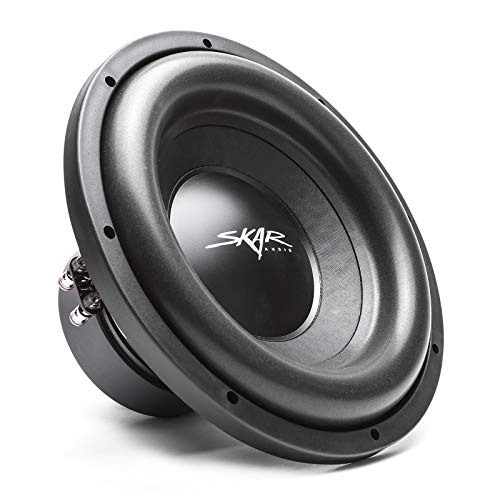
Skar Audio SDR-12 D4
Price varies, check the listingA 12 inch driver commonly run in both sealed and ported builds, so its own spec sheet is the reference point for whichever alignment gets chosen.
Check price on AmazonFrequently asked questions
- Is a sealed or ported box better for sound quality?
- Sealed boxes are the conventional pick for accuracy because their flatter response and simpler spring-and-mass behavior produce tighter, more controlled transients across the band they cover. Ported boxes trade some of that flatness for roughly 3 dB more output concentrated near the tuning frequency, which suits louder, bass-forward listening far more than it suits strict accuracy or a neutral, source-matched sound.
- Can I put a ported subwoofer in a sealed box instead?
- Most drivers can run in either alignment, but the manufacturer usually publishes separate sealed and ported net volume recommendations for the same driver. Using the sealed figure produces the sealed behavior described here, and using the ported figure with a properly sized and tuned port produces the vented behavior. Mixing a ported volume with no port defeats the design.
- Do I need a subsonic filter on a sealed box?
- It is optional but still a good idea. A sealed box rolls off gradually at 12 dB per octave and does not unload the way a ported box does below tuning, so it is inherently more forgiving of deep infrasonic content. A subsonic or high-pass filter still protects against extreme excursion from very low frequencies at high power.
- Why does my ported box sound boomy compared to sealed?
- That boominess is usually the tuning frequency doing exactly what it was designed to do: reinforcing output in a narrow band near the port's resonance. If the tuning point sits too high or the box is undersized for the driver, that reinforcement can sound exaggerated. Checking the actual net volume and tuning against the driver's spec sheet usually explains the difference.
- How much bigger does a ported box need to be than sealed?
- As a rough convention, a ported enclosure for a given 12 inch driver often needs 50 to 75 percent more net volume than the same driver's sealed recommendation, though the exact ratio depends on the driver's own parameters. The manufacturer's sealed and ported figures for that specific model are the numbers to build to, not a fixed percentage.
- Which alignment is more forgiving of a box-building mistake?
- Sealed. Because a sealed box is a simple air spring with a gradual rolloff, being off by a modest amount on net volume changes the response gently rather than dramatically. A ported box is more sensitive to volume and port tuning errors, since both interact to set the resonance, and a meaningful mistake can shift or blur the intended output peak.
Researched guidance, not professional advice. The volume and tuning ranges here are conventional starting points, not a substitute for the net volume and port specification published for your exact driver. Confirm the manufacturer's own recommendation before cutting any panels, and add a subsonic filter on a ported build regardless of how careful the box is.